Friday, June 18, 2010

2010: The Year of Voters Behaving Badly


"If the ruler is upright, the people will do things without being ordered; if the ruler is not upright, even though he orders people to do something they will not comply."
- Analects of Confucius
"There's something wild about you child
That's so contagious

Let's be outrageous
--let's misbehave!!!"

- "Let's Misbehave" by Cole Porter.
The June 8th South Carolina Democratic senatorial primary is an important harbinger of the fall elections. Vic Rawl, the candidate supported by most of the Democratic party leaders, was expected to handily win the nomination. In a stunning upset, Rawl lost in a landslide to Alvin Greene, an unemployed veteran who did no fund raising, virtually no conventional campaigning, and whose campaign had neither a twitter account nor even a website. How could this happen?

Greene insists that he won with old fashioned stumping, driving across the state and meeting with the voters. As appealing as this explanation is, Greene does not appear to have the charisma to pull this off in his post-primary interviews. Some S.C. Democrats speculate that Greene is a Republican plant. This seems unlikely for a number of reasons. Pollsters agree that Senator Jim DeMint will almost certainly win re-election. Why would the S.C. Republicans take the risk of cheating when they can win honestly? Also, the only outside support that Greene allegedly received was the payment of his filing fee. If some conspirators came up with that fee, why didn't they back up their investment with some campaign funds? But more importantly, even if Alvin Greene were a plant, why did nearly 60% of S.C. Democratic voters pull the lever for him?

The answer is as simple as it is troubling for the major political parties. South Carolina voters resented the idea of anointing the Democratic leadership pick of Vic Rawl, and they resented it so much that they were willing to pick any other name on the ballot, even if it was someone they never heard of. This is part of a trend this year: voters in this year's primaries and special elections are refusing to follow the unwritten rules of behavior.
  • The special election to fill late Senator Ted Kennedy's seat was widely expected to be over with the Democratic party primary. Conventional wisdom said that solidly Democratic Massachusetts would never replace the late senator with a Republican. Conventional wisdom was wrong; Republican Scott Brown won that race.
  • In the Utah Republican senate primary, the party leaders lined up behind the incumbent Senator Bob Bennett. The Republican voters of Utah disagreed, deciding that they preferred a newcomer over their sitting senator.
  • Much of the Democratic establishment, including the President, welcomed Senator Arlen Spector into their ranks and endorsed his bid to be the Pennsylvania Democratic nominee. A group of liberal Democrats disagreed, and successfully defeated Spector's nomination.
  • In Arkansas, local labor groups ignored pleas from the national party and President Obama and campaigned against the re-nomination of Rep. Blanche Lincoln. Lincoln just barely won the nomination, but the aggressive primary fight has made her defeat in the general election an almost certainty.
This trend cuts across both party and ideological lines. Voters of all stripes are refusing to obey the unwritten rules. What has made this year's voters so ornery?

Maybe the problem could be traced to our leaders. After all, they also have unwritten rules. How good have they been at following them? Let's take a look at the Republicans. The rules say that the Republicans will avoid foreign entanglements, support free markets, cut excessive regulation and reduce deficits. For six years under the previous administration, Republicans held the presidency and a majority in both houses, and in those years:
  • We entered two wars that have no clear end date;
  • Congress enacted the most strongly protectionist policies since the Hoover administration, including high steel tariffs and farm subsidies;
  • From 2001 to 2007, our supposed de-regulators actually added another 13,652 pages of regulations to the Federal registry; and
  • By any measure, the federal deficit rose to a historic high.
It is interesting to note that on several of these issues (free trade, deregulation, balancing the budget), the Clinton administration had a better record of following the Republican rules than the Republicans did!

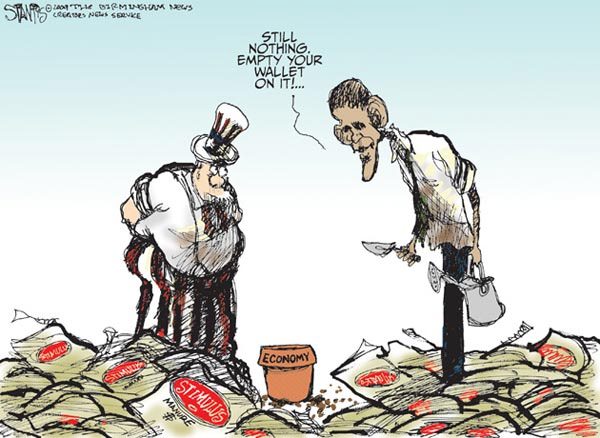
Now let us take a look at the Democrats. The rules say that Democrats will bring the troops home, counter corporate influence over our government, reign in executive power, and protect our civil liberties. Well, let's look at the record:
Given the Obama record, it is no surprise that Daniel Ellsberg, the man behind the Pentagon Papers, said in a recent Der Spiegel interview
"I think Obama is continuing the worst of the Bush administration in terms of civil liberties, violations of the constitution and the wars in the Middle East."
The question is not why voters are so contrarian this year. The real mystery is why voters have been so obedient for so long. As Confucius taught us more than two thousand years ago, politicians will see better behavior only after they model better behavior themselves. In the mean time, voters will continue to reason that "If our leader won't follow the rules, why should we?"

Saturday, June 5, 2010

The Nomi Song Will Set You Free

"I CELEBRATE myself, and sing myself,
And what I assume you shall assume,
For every atom belonging to me as good belongs to you."
- "Song of Myself" by Walt Whitman

"I'm young and I love to be young
I'm free and I love to be free
To live my life the way I want
To say and do whatever I please"
- "You Don't Own Me" by Leslie Gore
Klaus Nomi was one of the most talented Rock vocalists of all time, and certainly the one of most eccentric. His career was remarkably brief: he died on August 6, 1983, only two years after the release of his debut album. But the impact of his short tenure on the world stage nearly 27 years ago can still be seen in current culture and society.

Klaus was a leading light of the new wave movement in the late 1970's / early 1980's. This was an era when rock music was big business, and recorded music was the most profitable sector of the entertainment industry. But many artists felt that the obvious commercial success of the music industry was masking a serious problem: rock music was becoming standardized, dull, and formulaic. The rock genre needed new, fresh ideas in order to survive. In 1978, some young artists in New York devised a way to develop these new ideas by reviving an old idea: vaudeville. They staged a review called "New Wave Vaudeville" where performing artists of all stripes could try out their innovations before a live audience.

Enter Klaus Sperber, a West German counter tenor who had done some performing in Avant Garde theater. For the New Wave Vaudeville, he put together a rock act under the name Klaus Nomi. The act portrayed him as an visitor from another planet. He appeared on stage with a costume and make-up inspired by 1920's Dadaist theater, and with a hairstyle that actually emphasized that he was going bald. His set consisted of New Wave songs, classic rock songs, old standards like "Falling in Love Again", and his first love, opera. His stage persona was openly gay at a time when that was still controversial. Well, they said they were looking for something different, and Klaus Nomi definitely delivered. Nobody could mistake him for Eddie Money. As a vaudeville insider put it, "He was the wrong man, doing the wrong thing, at the wrong time". So naturally, he was the hit of the show.

His unusual background actually served him well in his role of rock singer. His opera training gave his voice phenomenal range and control. He also imparted a certain emotional intensity to every song he did, and his unique approach to his music provided us with a fresh look to even the most familiar of songs.

For example, Nomi did a cover of Leslie Gore's 1964 hit, "You Don't Own Me". Hailed as a feminist anthem, this song's lyrics are a girl's declaration of independence from a domineering boyfriend. Typically, when a man sings a song written for a woman, the gender references are swapped. Klaus sang the original lyrics, including the lyric "Don't say I can't go with other boys". In fact, when he gets to that line, he defiantly emphasized the word "boys". In short, he turned this feminist anthem into a gay pride anthem.

This song was seen as quite liberating by straight audiences as well as gay. This is in part because all of us, at some time or another, are burdened by social pressure. Nobody is a perfect match for societal norms, and hence everybody can sympathize with a square peg being hammered into a round hole. And that is what makes Nomi's cover of "You Don't Own Me" so joyous: in a world where this ultimate non-conformist can proclaim his freedom is a world where we can all be free.

After the New Wave Vaudeville, Klaus developed a devoted following in New York, and was very well received in Europe. He signed a contract with RCA. His debut album may be the only record that has both a song written by Chubby Checker and an aria written by Camille Saint-Saƫns. He seemed well on his way to making it big when he contracted AIDS. He became one of the first celebrities to die of the disease, passing away years before either Liberace or Rock Hudson.

In spite of his tragically early demise, Nomi continues to attract new generations of fans through some appropriately unconventional channels. The hipsters who produce the Adult Swim show "The Venture Brothers" included Klaus as a supporting character. More surprisingly, Nomi got a boost from conservative icon Rush Limbaugh. Rush uses Nomi's "You Don't Own Me" as one of his update themes, and this has spiked interest (and sales) among conservative republicans.

It may seem strange the same political movement that gave us the infamously anti-gay 1992 Family Values convention is now listening to the music of Klaus Nomi. I would argue that Klaus Nomi actually represents what the Republican party is supposed to be about far better than the 1992 convention did. After all, if the Republicans are serious about the principles of promoting limited government and individual liberty, what better spokesman could they have than Nomi?

The 2004 documentary of Klaus Nomi's life and career, "The Nomi Song" is now available online, and I heartily recommend it. If nothing else, catch the end of the film. The film makers have a very clever, almost magical and surprisingly upbeat way to wrap up his life story.

Sunday, May 23, 2010

The Saint Valentine's Day Massacre Out West


"If you have a lot of what people want and can't get, then you can supply the demand and shovel in the dough."

- Lucky Luciano
"Tell me why are we, so blind to see
That the ones we hurt, are you and me?"

- From "Gangsta's Paradise" by Coolio
Arizona Senate Bill 1070, the country's strictest anti-illegal immigration legislation, has generated a lot of discussion from both sides of the political spectrum. But somehow, nearly everyone avoids talking about the root causes of the crisis that spawned SB 1070.

Arizona is suffering from a meteoric rise in violent crime, including murders, assaults and human trafficking. Most of this crime is caused by Mexican organized crime groups. In just a few short years, Phoenix has become the kidnapping capital of the western hemisphere. It is totally understandable that many Arizonians would want to take action. The public outcry over the brutal slaying of 58 year old rancher Robert Krentz and his dog made some sort of action inevitable.

SB 1070 , like most legislation produced from a panic, unfortunately has some serious flaws. The bill aims to cut down on illegal immigration. The premise is that without illegal immigrants from Mexico, we would have no Mexican crime cartels. This simplistic approach to the crime would negatively affect law-abiding immigrants without really addressing the real cause of the crime wave.

Why did the Mexican cartels invade Arizona in recent years? After all, the flood of Mexican immigrants has been going on for decades now. This question could be answered by looking south of the border. The cartels have been active in Mexico and South America for decades, demonstrating all the brutality that Arizona is now experiencing. Mexico has fought back by liberalizing its drug policy, eliminating much of the profit of the cartel's activities. The cartels have therefore moved to greener pastures up North, where our continuing war on drugs guarantees them artificially high profits.

But couldn't SB 1070 keep the cartels out of the US? Frankly, I doubt it, but let us assume that Sb 1070 was 100% effective at keeping out the Mexican cartels. Does anyone really believe that some other organized crime group would not pick up the slack? A quick check of INTERPOL will show that the Albanian Rudaj Organization, the Russian Bratva, the Chinese Triads, and even the Japanese Yakuza are active in the U.S. Any one of these groups would love to take over the drug trade. SB 1070, even if it accomplished all of its goals, would do little more than change the identity of the gangs performing the kidnappings and murders.

The cause of the problem is really the war on drugs, and hence the solution is to bring this ill fated war to an end. Consider the Saint Valentine's Day Massacre of February 14, 1929. The public outcry over this brutal mob hit brought Prohibition into question. It soon became clear that the crime and corruption caused by prohibition far outweighed its benefits. So let us view the Robert Krentz execution as the Saint Valentine's Day Massacre of our time: a horrific crime that reveals that the war on drugs extracts a price on us all that is too high to pay.

Wednesday, May 12, 2010

Elena Kagan, George McGovern, and Experience


"Experience. The wisdom that enables us to recognize in an undesirable old acquaintance the folly that we have already embraced. "
- From "The Devil's Dictionary" by Ambrose Bierce.
Most of the discussion about supreme court nominee Elena Kagen has centered around her experience. Critics have noted that for all her accomplishments, Kagen has not spent much time in the courtroom. In a column published this morning, Boston Herald columnist Margery Eagan had a different take on the experience issue: the problem with Kagen is not her lack of time in court, it is her lack of time spent outside of the company of elites and positions of privilege. As Eagen points out, the current court, even with Kagen, shows diversity in the areas of race and gender, but virtually no diversity of background. All of these justices come from Ivy League schools. Only Thomas and Sotomayor have worked in state or local courts. With Justice Stevens departure, the court will have no veterans.

The problem is not just with the supreme court; the executive branch also lacks background diversity. Less that 10% of the Obama cabinet have work experience in the private sector. President Obama has never had to make payroll. Some of his statement reflect a lack of understanding of how businesses work, such as when he refers to profits as overhead, or proclaiming at a February press conference that "If [small businesses] can get the bank loans to boost their payroll ...".

Why is this lack of experience with life outside of the elites important? Consider former senator and presidential candidate George McGovern. After leaving the Senate, George bought an inn in Connecticut. Four years later, the inn went bankrupt. In his frank assessment of his inn's failure, George McGovern places the blame on policies he enacted as a Senator! Among the inn's woes were excessive regulations that place an especially heavy burden on small businesses. Lawsuit abuse was also an issue: he was forced into expensive litigation over people who fell in - or near - his establishment. Moreover, he noted that medical lawsuit abuse was driving up his medical insurance costs. As a senator, he had heard these concerns from businessmen, but dismissed them as overblown. McGovern admits that this business venture has taught him how wrong he was to dismiss these concerns, and that if he had tried his hand at a business earlier in life, he would have been a better senator and presidential candidate.

So the next time a nominee comes up for confirmation, please urge our senators to avoid unimportant issues such a ethnicity, gender, and sexual orientation, and ask the really important questions:
  • Have you ever run a cafe, a dry cleaner, or other such small business?
  • If not, what qualifies you to judge the people who do?

Friday, February 12, 2010

Cartoon Robot Reveals The Meaning Of Life

"The wicked person flees when there is no one pursuing, but the righteous person is as confident as a lion."

- Proverbs 28:1

"Astro Boy there you go
Will you fight friend or foe?
Cosmic ranger, life of danger,
Everything is GO Astro Boy."
- From the Astro Boy Theme by Tatsuo Takai
One of the most influential forms of popular culture is the Japanese style of animation commonly known as anime. Anime can be seen
  • on the various network Saturday morning cartoon blocks;
  • as part of adult animation networks such as Adult Swim;
  • and in the movie theaters, e.g. the Miyazaki features "Ponyo" and "Howl's Moving Castle".
Along with my fellow baby boomers, I witnessed the beginning of Anime in America, in the humble form of the black and white television cartoon series "Astro Boy" (1963-1966). Created by anime / manga pioneer Osamu Tezuka, "Astro Boy" is a science fiction story that takes place in a future society where robots are commonplace. A leading scientist, distraught with the death of his own son, creates an advanced robot in the likeness of his boy. The robot, named Astro Boy, has human-like emotions as well as incredible strength and the ability to fly. Astro uses his special robot abilities to serve as a superhero, fighting crime and injustice.

The series is an appealing combination of adventure and humor, but the appeal of the show went beyond these elements. The show actually dealt with some serious issues in way that the kids in my neighborhood really respected. For example, Astro Boy frequently had to deal with his society's antiquated attitude towards robots: even though many robots in Astro's world had feelings and intelligence, they were often treated as mere objects by the humans. Growing up in 1960's Detroit, I assumed that this unfair treatment of robots was a parable about racism. Later, I learned that Tezuka's WWII experiences galvanized his disdain of racism, and that his works often include anti-racist themes. Reading Tezuka's anti-Nazi manga "Adolf", I could not help but think of Astro Boy.

The episode that had the greatest impact on us was the final episode of the 1960's, "The Greatest Adventure on Earth" (1966). Towards the end of the show , Astro discovers that a planet-destroying missile is heading towards the Earth. Astro barely has enough time to redirect the missile into the sun, but he cannot do so without being pulled into the sun himself. Our hero saves the Earth and sacrifices himself in the process. I was shocked when I saw our cartoon hero die, but only for a second, for it occurred to me that there was something wonderful about this episode. "Astro Boy" was the only show of that era that trusted the kids of our age to be able to handle the important topic of death. They didn't side step it, they didn't sugar coat it, and they didn't talk down to us. They made it clear that Astro Boy was not coming back from his final mission. I really appreciated the trust and respect that the show's creators had in us kids.

In the 1983 "Sesame Street" episode "Farewell, Mr. Hooper", Big Bird learns that storekeeper and friend Mr. Hooper had died. This episode won accolades for its honest depiction of death in terms that child viewers could understand. Granted, "Farewell, Mr. Hooper" episode handled the topic of death exceptionally well, but it should not be forgotten that "Astro Boy" taught children about mortality over a decade before "Sesame Street" did. Moreover, "Astro Boy" dealt with the even more sensitive topic of the death of a child.

There is something uplifting about the final "Astro Boy" episode: he died to uphold the same principles he held throughout his brief existence. Astro's death was a good death in a way, in that it was the finish to a good and honorable life.

Thursday, January 28, 2010

The Rise of the Non-Religious Right

"And I have no doubt that every new example will succeed, as every past one has done, in shewing that religion & Govt will both exist in greater purity, the less they are mixed together."
- James Madison, in a letter to Edward Livingston

"That's me in the corner
That's me in the spotlight, I'm
Losing my religion
Trying to keep up with you
And I don't know if I can do it
Oh no, I've said too much
I haven't said enough"
- From "Losing My Religion" by R.E.M.
One advantage of being a libertarian is that it allows one to view the more dominant political movements (i.e. liberalism and conservatism) without bias, and hence detect trends that mainstream analysts often miss. One such trend is the right's recent acceptance of the non-believers in their ranks. Just a few years ago, the religious right had a dominant role in the conservative movement. They were George W. Bush favorite constituency. It is significant that this president that was (in)famous for his restrained use of the veto pen first used it on an issue pushed almost exclusively by the religious right. But the following events suggest how quickly things have changed in just a few years.
  • When Ayn Rand first gained prominence in the 1940's and 50's, the right widely criticized her for her militant atheism. But this year, the revival of interest in Rand's work has gotten quite favorable coverage from the right wing media. Her atheism is noted briefly in passing, if at all.
  • John Derbyshire, editor of the National Review Online, mentions in his new book "We Are Doomed: Reclaiming Conservative Pessimism" that, due to his doubts, he has not attended a church in years. The right wing web sites I've seen that have reviewed the book have not made a big fuss about Derbyshire's decision to leave his church; in fact, few sites even mention it.
  • A recent poll of young republicans show that the right's next generation has very little interest in the religious right's agenda. It appears that this might be the last generation where same-sex marriage will be a contentious issue.
The religious right has always been controversial, even in conservative circles. Remember Goldwater's famous quote, "Every good Christian ought to kick Falwell right in the ass"? One would expect the religious right to lose some clout in recent years, due to their connection to the pariah George W. Bush. But even so, a change this dramatic is worth noting.

Sunday, January 24, 2010

Charles Darwin Meets Adam Smith

"Orgel's Second Rule: Evolution is cleverer than you are."
- Francis Crick

"Now there's no more oak oppression,
For they passed a noble law,
And the trees are all kept equal
By hatchet, axe, and saw."
- From "Trees" by Neil Peart
Great ideas in one field of study are often variants of great ideas in another field. Consider the theory of evolution as developed Charles Darwin, the father of modern biology. According to the theory of evolution, each new generation of a species will include genetic variations. The vast majority of these variation will not help the organism to survive, and hence will quickly disappear. The rare variation that helps the organism survive, however, will be passed onto the next generation and will improve the species. The rich, vibrant ecological system we have today is the bi-product of the myriad of these variants that have occurred in Earth's history.

The process of evolution can seem wasteful and cruel: not only do most variants fail, but often once viable species become extinct due to competition from new species. But the destruction of less fit species is a vital part of the process, and the payoff of this process is huge.

The theory of Evolution has a striking resemblance to the free market concept as advocated by Adam Smith, the father of modern economics. In a free market economy, one is permitted to start a new business to provide a good or service. As with most biological variants, most new businesses fail. But the business that finds a better way to satisfy market needs will have a competitive advantage that will allow it to survive. As with evolution, a free market economy can seem cruel and wasteful, as many new businesses and even old established businesses go under. But this destruction is an essential part of the process of improving the economy. The fall of less fit companies is required to allow the next innovations to thrive.

The recently proposed "Financial Crisis Responsibility Fee" shows how poorly the work of Adam Smith (and evolution) is understood in Washington these days. The idea is being sold as a way for the taxpayers to get back the money they lent to the bankers for the recent bailout. The problem with this fee, however, is banks that have already repaid their loans with interest, and even banks that did not take any federal funds, will be required to pay this fee. In effect, the banks that managed the recent financial tsunami properly will be called on to cover the expenses caused by less well run banks. None of this "survival of the fittest" jazz here; D.C. has decided that all banks should be saved, whether they are fit or not.

To understand what is wrong with this proposal, consider what would have happened if the proponents of this proposal had been in charge of fixing the Earth's environmental crisis of 65 million B.C.E.
"Let me be clear: the major species of this planet, the Tyrannosaurus and Triceratops are too big to fail without causing the ecology to go into major collapse. There are those who say that we need to choose between saving these dinosaurs and allowing the new mammals to flourish. This is a false choice: the Earth can support both, as long as the new mammals follow sensible restrictions. I tell these new mammal species that there is a time for multiplication, but now is not that time. "
I'm glad this approach was not taken in the late Cretaceous period: the dinosaurs would still have gone extinct, and the world would now be poorer for this futile attempt to put off the inevitable. The proposed bank fee was a bad idea 65 million years ago, and it still is a bad idea today.